
Would you like to switch to the accessible version of this site?

Go to accessible site Close modal window

Don't need the accessible version of this site?

Hide the accessibility button Close modal window
Accessibility View Close toolbar
Eye Catchers

204 E. College Blvd.

Roswell, NM 88201 USA

575-625-9800

Open mobile navigation
  • Home
  • New Patient Center
    • Online Forms
    • Payments Options
  • Eyecare Services
    • Contact Lens Exams
    • Eye & Vision Exams
    • Lasik Eye Surgery
    • Eye Surgery
    • Hard to Fit Contacts
    • Computer Vision
    • Sunglasses
  • Frame Selection
  • About Us
    • Meet The Optometrist
  • Contact Us
  • Blog
  • Community Content
    • Common Eye Conditions
      • Age-Related
      • Cognitive and Acquired
      • Vision Impairment
      • Injury & Irritation
      • Eye Lids
      • Changes in Appearance
    • Contact Lenses
    • Eye Diseases
    • Eyeglasses
      • Eyeglass Lenses
    • Eye Symptoms
    • How the Eyes Work
      • Basic Visual Skills
    • Pediatric Vision
    • Protecting Your Eyes
    • Visual Rehabilitation
    • Vision Problems
    • What is Vision Therapy
    • Vision Therapy Programs
    • We Can Help With
      • Cataracts
      • Corneal Disorders
        • Disorders
      • Glaucoma
      • Refractive Disorders
      • Adult Strabismus
      • Retinal Disorders
    • Newsletters
      • Glasses & Frames
      • Contacts
      • Tips for Healthy Eyes
      • Conditions That Affect Vision
      • Kid's Vision
      • Amazing, Interesting Eyes
      • Medical Perspectives
  • Home >
  • Articles >
  • Newsletters >
  • What Is a Chalazion?

What Is a Chalazion?

  • Created in Newsletters

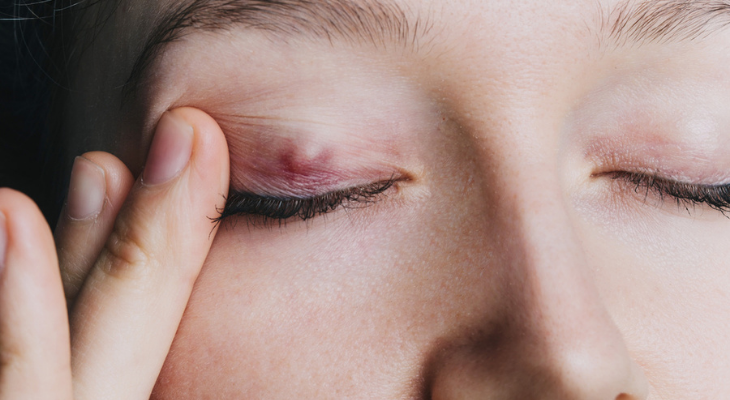
Woman with chalazion on eye

The Causes, Treatments, and Prevention of a Chalazion

Are you wondering what the red bump on your upper or lower eyelid is? A chalazion could be to blame.

What Causes a Chalazion?

A chalazion forms when a meibomian gland at the edge of your eyelid becomes clogged. These glands make oils that moisturize your eyes and prevent tears from evaporating too soon. As a result of the blockage, oil backups in the gland, forming a noticeable bump on your eye. Styes can also cause bumps on your eyelid, but unlike styes, a chalazion isn't painful. But, it can become painful if it becomes infected.

In addition to being unattractive, a chalazion can affect your vision. They may make your eyesight look a little blurry, but it is also possible for them to have the opposite effect. For example, if you're nearsighted, you may notice that your vision looks a little clearer due to the pressure that the bump exerts on your eye.

The eyelid bumps are most common in adults ages 30 to 50, according to the American Optometric Society. You may be more likely to develop a chalazion if you have any of these issues or conditions:

  • Blepharitis (eyelid inflammation)
  • Rosacea (a skin condition that causes facial flushing and small, red bumps)
  • Seborrheic dermatitis (a skin condition that affects the oiliest parts of your body)
  • A condition or disease that affects your immune system
  • A virus
  • Stress
  • Skin cancer
  • Eyelid injury or surgery
  • Tuberculosis

How Is a Chalazion Treated?

Applying warm compresses to your eyelid can open the oil gland and help it drain. Washcloths make excellent compresses. Run the washcloth under warm water, then wring out excess water, and place the compress on your eye. Apply warm compresses four or five times a day for 10 to 15 minutes each time. After you remove the washcloth, massage the chalazion using gentle pressure.

Although compresses can be very helpful, they don't always help you get rid of the bump on your eyelid. If the chalazion doesn't go away after a few weeks, affects your vision, or causes your entire eyelid to swell, call your optometrist. Your eye doctor may prescribe anti-inflammatory eye drops or corticosteroid injections that reduce swelling and inflammation that will get rid of the bump.

Stubborn chalazia often need to be drained. During this procedure, your eye doctor numbs your eye, then makes a small incision and drains the chalazion. Because the incision is made inside your eyelid, you won't have any scarring. If the chalazion is infected, you may also need to take antibiotics.

What You Can Do to Prevent a Chalazion

Following these recommendations can help you avoid a new chalazion:

  • Clean Your Eyelids Every Day. Dilute baby shampoo in warm water or use an eyelid cleanser to keep your eyelids clean and free of debris and bacteria. Be sure to remove your eye makeup every night before you go to sleep.
  • Wear Eye Protection. Use goggles or safety glasses when working around dust, sawdust, or other airborne materials.
  • Don't Touch Your Face. Like most people, you probably touch your face throughout the day without even thinking about it. Unfortunately, your hands can transfer germs to your eyes and make it easier for chalazia to form. Making an effort to reduce the number of times you touch your face can reduce your risk.
  • Wash Your Hands Often. Washing your hands before you put in or take out your contacts or touch your eyes for any reason offers a simple way to reduce your risk of another chalazion.
  • Make Eye Makeup Safety a Priority. Don't share makeup with anyone, especially eye makeup. Replace mascara and other eye makeup at least every three months.

Could the bump on your eye be a chalazion? Contact our office to schedule an appointment with your optometrist.

Sources:

American Academy of Ophthalmology: What Are Styes and Chalazia?, 11/18/2021

American Optometric Association: Chalazion

All About Vision: All About Chalazion, 1/2022

  • Common Eye Conditions
    • Age-Related
    • Cognitive and Acquired
    • Vision Impairment
    • Injury & Irritation
    • Eye Lids
    • Changes in Appearance
  • Contact Lenses
  • Eye Diseases
  • Eyeglasses
    • Eyeglass Lenses
  • Eye Symptoms
  • How the Eyes Work
    • Basic Visual Skills
  • Pediatric Vision
  • Protecting Your Eyes
  • Visual Rehabilitation
  • Vision Problems
  • What is Vision Therapy
  • Vision Therapy Programs
  • We Can Help With
    • Cataracts
    • Corneal Disorders
      • Disorders
    • Glaucoma
    • Refractive Disorders
    • Adult Strabismus
    • Retinal Disorders
  • Newsletters
    • Glasses & Frames
    • Contacts
    • Tips for Healthy Eyes
    • Conditions That Affect Vision
    • Kid's Vision
    • Amazing, Interesting Eyes
    • Medical Perspectives

Contact Us

Featured Links

Click to find out more

Monday:

Closed

Tuesday:

8:30 am-12:00 pm

1:30 pm-5:00 pm

Wednesday:

8:30 am-12:00 pm

1:30 pm-5:00 pm

Thursday:

8:30 am-12:00 pm

1:30 pm-5:00 pm

Friday:

8:30 am-12:00 pm

1:30 pm-5:00 pm

Saturday:

8:30 am-12:00 pm

Sunday:

Closed

Testimonials

Reviews From Our Satisfied Patients

  • "We use Anderson Optometry for all of our family’s vision needs. Recently, we had to have our youngest fitted for new glasses and he made the experience fun for her and informative for us. We know Dr. Anderson will always take good care of our family’s eye care and that’s why we wouldn’t go to anywhere else."
    The Harrison Family
  • "Dr. Anderson and his staff are so patient and friendly. Dr. Anderson prescribed me glasses and I had the toughest time picking out frames. They didn’t rush, but instead made helpful suggestions and now I have an awesome pair of frames, not to mention the fact that I can see ten times better than before. You guys are the best!"
    Shelly
  • "I’ve been going to Dr. Anderson for over five years now and even though I only see him once a year for my annual exam, he and his staff always make me feel very welcome and take care of all my eye care needs. Anderson Optometry is the best at what they do and make you feel right at home."
    Anthony

Featured Articles

Read up on informative topics

    March Newsletter: Top Signs You Need to See an Optometrist

    Do you need to make an appointment with the eye doctor? ...

    Read More

    March Newsletter: How Dehydration Affects Your Eye Health

    Do you know how dehydration affects your eyes? ...

    Read More

    February Newsletter: How to Prepare for an Eye Exam

    Are you ready for your eye exam? ...

    Read More

    February Newsletter: What are Eye Floaters and When Should You Seek Treatment?

    Do you know when eye floaters need treatment? ...

    Read More

    January Newsletter: Why You Should Not Ignore Dry Eye Symptoms

    Are your eyes dry? Find out why you shouldn't overlook your symptoms. ...

    Read More

    January Newsletter: How the 20-20-20 Rule Can Reduce Eye Strain

    Struggling with eye strain? This simple rule can help. ...

    Read More

    December Newsletter: The Best Contact Lenses for Dry Eyes

    Need to find more comfortable contacts for your dry eyes? Take a look at these options. ...

    Read More

    December Newsletter: Daily Habits That Affect Your Vision

    Could your daily habits harm your eyesight? ...

    Read More

    November Newsletter: Why It's Important to Have an Extra Pair of Eyeglasses or Contact Lenses

    Do you have an extra pair of eyeglasses or contact lenses? ...

    Read More

    November Newsletter: The Advantages of Rimless Eyeglasses

    Are rimless eyeglasses right for you? ...

    Read More

NEWSLETTER SIGNUP

Sign up for more articles

Follow Us

  • Copyright © 2026 MH Sub I, LLC dba iMatrix.
  • Admin Log In
  • Site Map