
Would you like to switch to the accessible version of this site?

Go to accessible site Close modal window

Don't need the accessible version of this site?

Hide the accessibility button Close modal window
Accessibility View Close toolbar
Eye Catchers

204 E. College Blvd.

Roswell, NM 88201 USA

575-625-9800

Open mobile navigation
  • Home
  • New Patient Center
    • Online Forms
    • Payments Options
  • Eyecare Services
    • Contact Lens Exams
    • Eye & Vision Exams
    • Lasik Eye Surgery
    • Eye Surgery
    • Hard to Fit Contacts
    • Computer Vision
    • Sunglasses
  • Frame Selection
  • About Us
    • Meet The Optometrist
  • Contact Us
  • Blog
  • Community Content
    • Common Eye Conditions
      • Age-Related
      • Cognitive and Acquired
      • Vision Impairment
      • Injury & Irritation
      • Eye Lids
      • Changes in Appearance
    • Contact Lenses
    • Eye Diseases
    • Eyeglasses
      • Eyeglass Lenses
    • Eye Symptoms
    • How the Eyes Work
      • Basic Visual Skills
    • Pediatric Vision
    • Protecting Your Eyes
    • Visual Rehabilitation
    • Vision Problems
    • What is Vision Therapy
    • Vision Therapy Programs
    • We Can Help With
      • Cataracts
      • Corneal Disorders
        • Disorders
      • Glaucoma
      • Refractive Disorders
      • Adult Strabismus
      • Retinal Disorders
    • Newsletters
      • Glasses & Frames
      • Contacts
      • Tips for Healthy Eyes
      • Conditions That Affect Vision
      • Kid's Vision
      • Amazing, Interesting Eyes
      • Medical Perspectives
  • Home >
  • Articles >
  • Newsletters >
  • How an Active Lifestyle Benefits Your Eye Health

How an Active Lifestyle Benefits Your Eye Health

  • Created in Newsletters

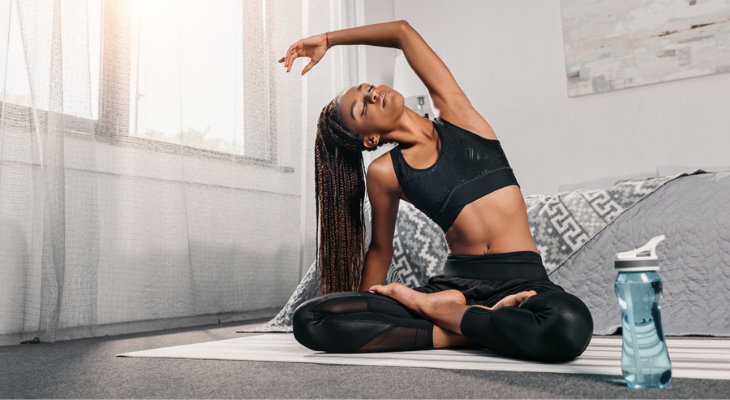
Young woman exercising

An Active Lifestyle Can Help You Protect Your Eyes

Staying active helps you maintain your weight, keeps your heart healthy, strengthens your bones, and may even help you lower your risk of several serious eye diseases. No matter what your age, increasing your activity level offers a simple way to safeguard your eye health.

The Eye-Health Benefits of an Active Lifestyle

Couch potatoes are at increased risk for many health problems, including conditions that can damage vision. The more you move, the less likely you'll develop glaucoma, macular degeneration, or diabetic retinopathy.

Reducing Your Risk of Glaucoma with Exercise

Glaucoma occurs when the pressure inside your eyes increases. If the pressure remains high, your optic nerve may be damaged. The optic nerve provides a crucial pathway between the eyes and the brain. Damage to the nerves prevents electrical impulses from the eyes from reaching the brain, causing loss of vision.

Aerobic exercise offers a natural way to lower the pressure inside your eyes and improve blood flow to the optic nerves and retinas. Walking, running, biking, swimming, dancing, and other types of exercise that raise your heart rate qualify as aerobic exercise. You don't need to schedule long workouts to enjoy the benefits of exercise. Walking briskly for 20 minutes at least four times a week can help protect your eyes, according to the Glaucoma Research Foundation.

Worried About Macular Degeneration? Increasing Our Activity Level Can Help

The same types of exercise that lower your glaucoma risk can also reduce your risk of developing the wet form of age-related macular degeneration (AMD). Wet AMD occurs when new, abnormal blood vessels begin to grow in the macula, the center part of the retina. The retina is a layer of light-sensing cells at the back of your eye. These vessels can leak fluids or blood and cause blurred vision or blind spots in the central part of your vision.

Researchers at the University of Virginia School of Medicine discovered that regular exercise reduced the overgrowth of blood vessels by up to 45% in mice. Staying active could have the same effect on people too.

Moving More May Also Help You Avoid Retinopathy

Retinopathy also happens due to blood vessel changes in the retina, although, unlike macular degeneration, the changes can affect the entire retina. High blood sugar levels caused by diabetes cause blood vessels in the retina to leak and may also encourage the growth of abnormal vessels. High blood pressure can also cause retinopathy.

Exercising often, in addition to eating a healthy diet, helps you maintain a healthy weight and reduces your risk of developing diabetes and high blood pressure.

No matter how busy your life is, you can probably spare 15 to 20 minutes every day or two to get a little aerobic exercise. If you're exhausted by the time you return home at the end of the day, exercise before you go to work, or put on your sneakers and go for a short walk during your lunch break.

Keep This Warning in Mind if You Have Glaucoma

If you already have glaucoma and are hoping to decrease the pressure inside your eyes with exercise, it may be a good idea to avoid exercises that require you to drop your head. Lowering your head while you exercise may cause pressure inside your eyes to rise.

If you practice yoga, avoid the downward-facing dog, forward bend, plow, and the legs-up-the-wall poses. These poses increased eye pressure in people with and without glaucoma, according to a research study published in PLOS One. For safety's sake, check with your eye doctor before you start a new exercise plan and continue to use the medication prescribed to treat your condition.

Embracing a healthy lifestyle, in addition to visiting your optometrist for annual eye exams, can help you protect your vision. If it's time for your next checkup, get in touch with our office to schedule an appointment.

Sources:

Glaucoma Research Foundation: Can Exercise Lower Eye Pressure?

University of Virginia: Exercise Can Slow or Prevent Vision Loss, UVA Study Suggests, 6/30/20

PLOS One: Intraocular Pressure Rise in Subjects with and Without Glaucoma During Four Common Yoga Positions, 12/22/15

  • Common Eye Conditions
    • Age-Related
    • Cognitive and Acquired
    • Vision Impairment
    • Injury & Irritation
    • Eye Lids
    • Changes in Appearance
  • Contact Lenses
  • Eye Diseases
  • Eyeglasses
    • Eyeglass Lenses
  • Eye Symptoms
  • How the Eyes Work
    • Basic Visual Skills
  • Pediatric Vision
  • Protecting Your Eyes
  • Visual Rehabilitation
  • Vision Problems
  • What is Vision Therapy
  • Vision Therapy Programs
  • We Can Help With
    • Cataracts
    • Corneal Disorders
      • Disorders
    • Glaucoma
    • Refractive Disorders
    • Adult Strabismus
    • Retinal Disorders
  • Newsletters
    • Glasses & Frames
    • Contacts
    • Tips for Healthy Eyes
    • Conditions That Affect Vision
    • Kid's Vision
    • Amazing, Interesting Eyes
    • Medical Perspectives

Contact Us

Featured Links

Click to find out more

Monday:

Closed

Tuesday:

8:30 am-12:00 pm

1:30 pm-5:00 pm

Wednesday:

8:30 am-12:00 pm

1:30 pm-5:00 pm

Thursday:

8:30 am-12:00 pm

1:30 pm-5:00 pm

Friday:

8:30 am-12:00 pm

1:30 pm-5:00 pm

Saturday:

8:30 am-12:00 pm

Sunday:

Closed

Testimonials

Reviews From Our Satisfied Patients

  • "We use Anderson Optometry for all of our family’s vision needs. Recently, we had to have our youngest fitted for new glasses and he made the experience fun for her and informative for us. We know Dr. Anderson will always take good care of our family’s eye care and that’s why we wouldn’t go to anywhere else."
    The Harrison Family
  • "Dr. Anderson and his staff are so patient and friendly. Dr. Anderson prescribed me glasses and I had the toughest time picking out frames. They didn’t rush, but instead made helpful suggestions and now I have an awesome pair of frames, not to mention the fact that I can see ten times better than before. You guys are the best!"
    Shelly
  • "I’ve been going to Dr. Anderson for over five years now and even though I only see him once a year for my annual exam, he and his staff always make me feel very welcome and take care of all my eye care needs. Anderson Optometry is the best at what they do and make you feel right at home."
    Anthony

Featured Articles

Read up on informative topics

    March Newsletter: Top Signs You Need to See an Optometrist

    Do you need to make an appointment with the eye doctor? ...

    Read More

    March Newsletter: How Dehydration Affects Your Eye Health

    Do you know how dehydration affects your eyes? ...

    Read More

    February Newsletter: How to Prepare for an Eye Exam

    Are you ready for your eye exam? ...

    Read More

    February Newsletter: What are Eye Floaters and When Should You Seek Treatment?

    Do you know when eye floaters need treatment? ...

    Read More

    January Newsletter: Why You Should Not Ignore Dry Eye Symptoms

    Are your eyes dry? Find out why you shouldn't overlook your symptoms. ...

    Read More

    January Newsletter: How the 20-20-20 Rule Can Reduce Eye Strain

    Struggling with eye strain? This simple rule can help. ...

    Read More

    December Newsletter: The Best Contact Lenses for Dry Eyes

    Need to find more comfortable contacts for your dry eyes? Take a look at these options. ...

    Read More

    December Newsletter: Daily Habits That Affect Your Vision

    Could your daily habits harm your eyesight? ...

    Read More

    November Newsletter: Why It's Important to Have an Extra Pair of Eyeglasses or Contact Lenses

    Do you have an extra pair of eyeglasses or contact lenses? ...

    Read More

    November Newsletter: The Advantages of Rimless Eyeglasses

    Are rimless eyeglasses right for you? ...

    Read More

NEWSLETTER SIGNUP

Sign up for more articles

Follow Us

  • Copyright © 2026 MH Sub I, LLC dba iMatrix.
  • Admin Log In
  • Site Map