
Would you like to switch to the accessible version of this site?

Go to accessible site Close modal window

Don't need the accessible version of this site?

Hide the accessibility button Close modal window
Accessibility View Close toolbar
Eye Catchers

204 E. College Blvd.

Roswell, NM 88201 USA

575-625-9800

Open mobile navigation
  • Home
  • New Patient Center
    • Online Forms
    • Payments Options
  • Eyecare Services
    • Contact Lens Exams
    • Eye & Vision Exams
    • Lasik Eye Surgery
    • Eye Surgery
    • Hard to Fit Contacts
    • Computer Vision
    • Sunglasses
  • Frame Selection
  • About Us
    • Meet The Optometrist
  • Contact Us
  • Blog
  • Community Content
    • Common Eye Conditions
      • Age-Related
      • Cognitive and Acquired
      • Vision Impairment
      • Injury & Irritation
      • Eye Lids
      • Changes in Appearance
    • Contact Lenses
    • Eye Diseases
    • Eyeglasses
      • Eyeglass Lenses
    • Eye Symptoms
    • How the Eyes Work
      • Basic Visual Skills
    • Pediatric Vision
    • Protecting Your Eyes
    • Visual Rehabilitation
    • Vision Problems
    • What is Vision Therapy
    • Vision Therapy Programs
    • We Can Help With
      • Cataracts
      • Corneal Disorders
        • Disorders
      • Glaucoma
      • Refractive Disorders
      • Adult Strabismus
      • Retinal Disorders
    • Newsletters
      • Glasses & Frames
      • Contacts
      • Tips for Healthy Eyes
      • Conditions That Affect Vision
      • Kid's Vision
      • Amazing, Interesting Eyes
      • Medical Perspectives
  • Home >
  • Articles >
  • Pediatric Vision >
  • Dyslexia

Dyslexia

  • Created in Pediatric Vision
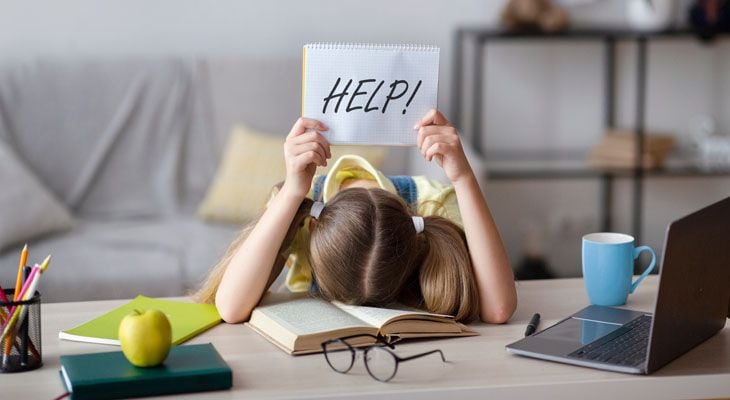
Young girl having trouble reading

Young girl having trouble reading

Dyslexia

When a child has difficulty reading due to problems recognizing speech sounds and learning how they connect to words and letters, the condition is known as dyslexia, a learning disorder caused by genetic traits that disturb how the brain works. It affects areas of the brain dealing with language and inhibits one’s ability to translate words and written letters into speech.

Dyslexia commonly occurs in children, although it may go undiagnosed for years and not recognized until adulthood. Symptoms may be hard to spot prior to the child attending school, but it is not impossible. Early warning signs include:

  • Challenges playing rhyming games or learning nursery rhymes
  • Talking later than what is considered normal
  • Learning new words at a slow pace

How Dyslexia Can Affect Cognitive Processes

Once a child begins school, his or her teacher may be the first to recognize the signs of dyslexia, particularly when he or she begins to learn how to read. This may come in the form of the child:

  • Having trouble comprehending instructions
  • Struggling to process and grasp what is heard
  • Having difficulty remembering sequences
  • Reading well below the level expected for their age
  • Having problems spelling and seeing likenesses/distinctions in words and letters
  • Failing to sound out the pronunciation of a word he or she is unaccustomed to

If dyslexia is not recognized by the time the child has reached adolescence or adulthood, he or she may have:

  • Challenges with time management
  • Trouble reading, even aloud
  • Problems summing up a story
  • Difficulty understanding expressions or jokes with a meaning not easily understood from the idioms
  • Obstacles with memorization and math problems

When diagnosing dyslexia, a doctor will request a variety of tests and look at a number of factors, including vision. Learning is achieved via intricate and interconnected processes, one of which is vision. Concluding the relationship between vision and learning requires assessing vision acuity (clarity of sight) and eye health, among other things. Having a vision test can assist with determining whether another disorder is the cause or adding to the child’s reading disability.

How Do You Treat Dyslexia?

If vision is the source or part of a learning-related vision problem, the optometrist’s goal will be to provide treatment necessary to improve visual function and reduce associated symptoms and signs. This may include prisms, eye drops, lenses, vision therapy or other visual aids.

It should be noted that while some proponents of vision therapy contend that it is an absolute treatment for dyslexia, professional optometric associations state that vision therapy does not directly treat dyslexia and other learning disabilities. Rather, vision therapy can be used to improve visual processing and visual competence, which then allows the child to be more receptive to education instruction. Therefore, vision therapy should be used in conjunction with other multidisciplinary approaches, such as tutoring and a specialized education program.

Vision therapy may include, but is not limited to, the following activities:

  • Looking through prisms
  • Donning an eye patch during a portion of the therapy session
  • Performing letter-finding puzzles
  • Putting tinted plastic over reading material, or wearing tinted glasses while reading material
  • Eye exercises

Each session takes about an hour and is done up to twice a week. Depending on the condition and how the child progresses, this therapy may be needed for three months to a year.

  • Common Eye Conditions
    • Age-Related
    • Cognitive and Acquired
    • Vision Impairment
    • Injury & Irritation
    • Eye Lids
    • Changes in Appearance
  • Contact Lenses
  • Eye Diseases
  • Eyeglasses
    • Eyeglass Lenses
  • Eye Symptoms
  • How the Eyes Work
    • Basic Visual Skills
  • Pediatric Vision
  • Protecting Your Eyes
  • Visual Rehabilitation
  • Vision Problems
  • What is Vision Therapy
  • Vision Therapy Programs
  • We Can Help With
    • Cataracts
    • Corneal Disorders
      • Disorders
    • Glaucoma
    • Refractive Disorders
    • Adult Strabismus
    • Retinal Disorders
  • Newsletters
    • Glasses & Frames
    • Contacts
    • Tips for Healthy Eyes
    • Conditions That Affect Vision
    • Kid's Vision
    • Amazing, Interesting Eyes
    • Medical Perspectives

Contact Us

Featured Links

Click to find out more

Monday:

Closed

Tuesday:

8:30 am-12:00 pm

1:30 pm-5:00 pm

Wednesday:

8:30 am-12:00 pm

1:30 pm-5:00 pm

Thursday:

8:30 am-12:00 pm

1:30 pm-5:00 pm

Friday:

8:30 am-12:00 pm

1:30 pm-5:00 pm

Saturday:

8:30 am-12:00 pm

Sunday:

Closed

Testimonials

Reviews From Our Satisfied Patients

  • "We use Anderson Optometry for all of our family’s vision needs. Recently, we had to have our youngest fitted for new glasses and he made the experience fun for her and informative for us. We know Dr. Anderson will always take good care of our family’s eye care and that’s why we wouldn’t go to anywhere else."
    The Harrison Family
  • "Dr. Anderson and his staff are so patient and friendly. Dr. Anderson prescribed me glasses and I had the toughest time picking out frames. They didn’t rush, but instead made helpful suggestions and now I have an awesome pair of frames, not to mention the fact that I can see ten times better than before. You guys are the best!"
    Shelly
  • "I’ve been going to Dr. Anderson for over five years now and even though I only see him once a year for my annual exam, he and his staff always make me feel very welcome and take care of all my eye care needs. Anderson Optometry is the best at what they do and make you feel right at home."
    Anthony

Featured Articles

Read up on informative topics

    March Newsletter: Top Signs You Need to See an Optometrist

    Do you need to make an appointment with the eye doctor? ...

    Read More

    March Newsletter: How Dehydration Affects Your Eye Health

    Do you know how dehydration affects your eyes? ...

    Read More

    February Newsletter: How to Prepare for an Eye Exam

    Are you ready for your eye exam? ...

    Read More

    February Newsletter: What are Eye Floaters and When Should You Seek Treatment?

    Do you know when eye floaters need treatment? ...

    Read More

    January Newsletter: Why You Should Not Ignore Dry Eye Symptoms

    Are your eyes dry? Find out why you shouldn't overlook your symptoms. ...

    Read More

    January Newsletter: How the 20-20-20 Rule Can Reduce Eye Strain

    Struggling with eye strain? This simple rule can help. ...

    Read More

    December Newsletter: The Best Contact Lenses for Dry Eyes

    Need to find more comfortable contacts for your dry eyes? Take a look at these options. ...

    Read More

    December Newsletter: Daily Habits That Affect Your Vision

    Could your daily habits harm your eyesight? ...

    Read More

    November Newsletter: Why It's Important to Have an Extra Pair of Eyeglasses or Contact Lenses

    Do you have an extra pair of eyeglasses or contact lenses? ...

    Read More

    November Newsletter: The Advantages of Rimless Eyeglasses

    Are rimless eyeglasses right for you? ...

    Read More

NEWSLETTER SIGNUP

Sign up for more articles

Follow Us

  • Copyright © 2026 MH Sub I, LLC dba iMatrix.
  • Admin Log In
  • Site Map